Our Carbon Footprint Report

Our Carbon Footprint Report

Climate change is a huge threat to humanity. At Ghyston, we are committed to reducing our impact on the natural environment and seeking opportunities to create positive change.

Dan Phipps Managing Director
1 minute read

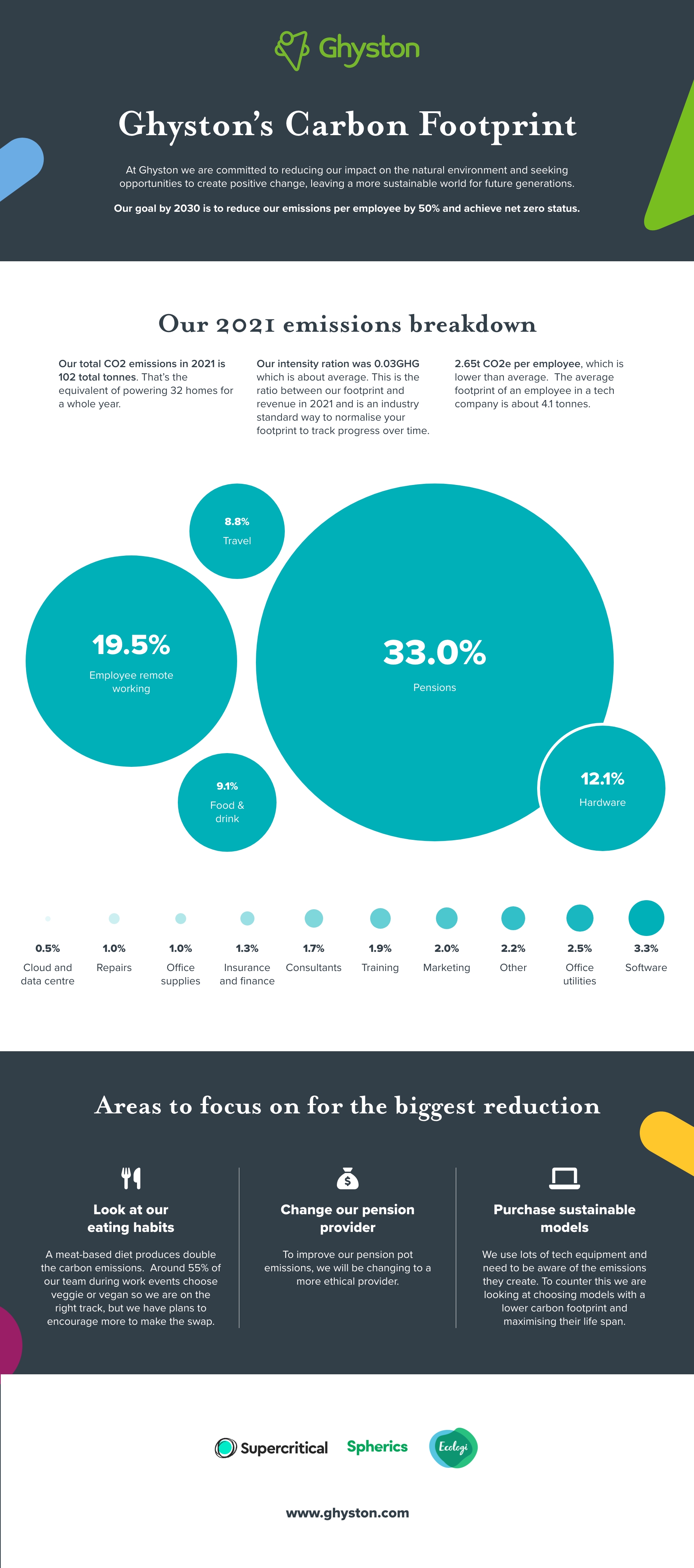
The first step towards net zero is to understand what our current impact is, in order to work out where we can make improvements. Supercritical produced a footprint report covering our emissions in 2021, with a breakdown showing where our emissions came from and recommendations on reductions (see below). We will share updates on the progress we are making throughout our journey.

Dan Phipps
Managing Director

We think you'll also enjoy

Thriving in Disruption: The Six Leadership Priorities for 2025 - 3. Building Diverse and Inclusive Teams in Tech

Diversity and inclusion are now essential drivers of innovation in tech, enabling teams to solve complex problems with broader perspectives and stronger collaboration. By removing bias from hiring, building truly inclusive cultures, and investing in continuous D&I training, leaders can create more equitable, creative, and high-performing organisations.
Ric Hill
9th December 2025
Learn more about Ric Hill's blog post

Thriving in Disruption: The Six Leadership Priorities for 2025 - 2. The New Role of Emotional Intelligence in Leadership

Emotional intelligence is becoming a defining skill for leaders in an era of rapid workplace change. By recognising and managing emotions with intention, leaders can strengthen team cohesion, elevate morale, and create the conditions for innovation to flourish. Prioritising active listening, empathetic decisions, and self-awareness enables teams to build trust, stay resilient, and perform at their best even amid disruption.
Ric Hill
4th December 2025
Learn more about Ric Hill's blog post

Thriving in Disruption: The Six Leadership Priorities for 2025 - 1. Navigating Disruption Through Strategic Agility

Strategic agility is now essential for leaders navigating constant change in tech and business. Rather than simply reacting, agile organisations anticipate shifts, pivot quickly, and seize new opportunities. Leaders can build this agility by using scenario planning, encouraging cross-functional collaboration, and empowering teams to experiment and innovate without fear of failure - creating more resilient, competitive organisations.
Ric Hill
26th November 2025
Learn more about Ric Hill's blog post

Subscribe to our newsletter

The latest news and industry insights, straight to your inbox

Loading form...